6 Mins Read
The Cortisol Awakening Response (CAR) and PCOS: Why You Wake Up Tired and Wired
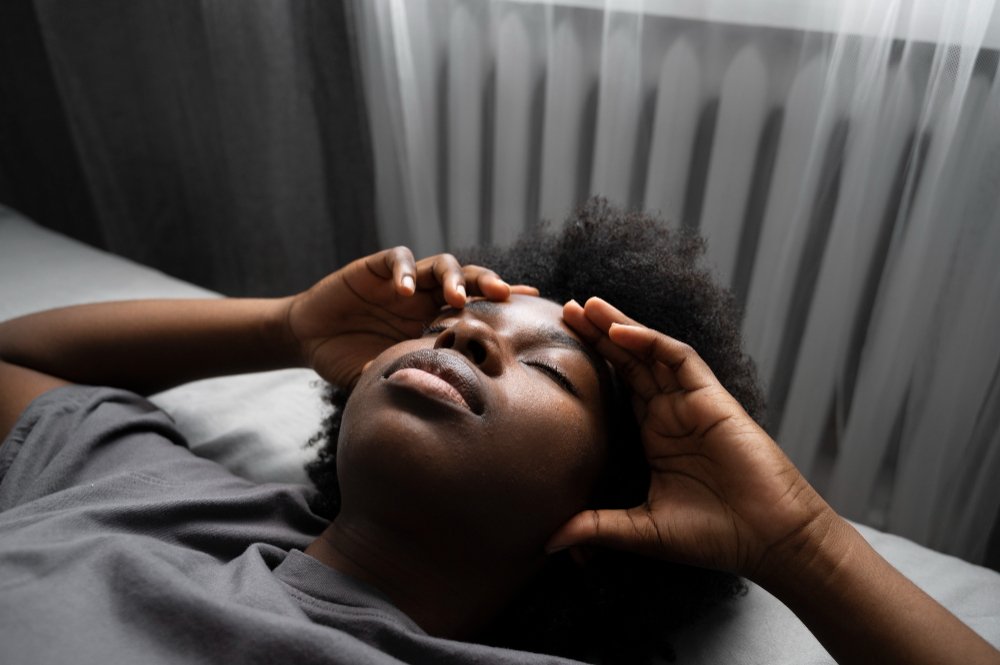
You wake up, open your eyes, and somehow feel exhausted before the day has even started.
Your body feels heavy. Your mind is already busy. Your heart may feel like it’s beating faster than usual, while your thoughts are racing through everything you need to do.
If you live with PCOS, you may have wondered whether this strange combination of tired and wired has something to do with your hormones.
There is a real biological process that happens every morning that may help explain part of the story.
It is called the Cortisol Awakening Response (CAR).
CAR describes the natural rise in cortisol that occurs during the first 30-45 minutes after waking. Cortisol is not simply a “stress hormone.” It helps your body transition from sleep to wakefulness, mobilise energy, and prepare you for the demands of the day.
PCOS has also been associated with changes in stress-related and circadian hormone regulation in some studies. But the relationship is complex, and there is no single CAR pattern that defines PCOS.
So if you wake up anxious, exhausted, or foggy, your experience is worth paying attention to. It just shouldn’t automatically be labelled as “high cortisol.”
What Is the Cortisol Awakening Response?
Think of cortisol as part of your body’s morning transition system.
During sleep, your cortisol levels follow a circadian rhythm. As morning approaches, cortisol secretion begins to increase.
After you wake, cortisol normally rises further over approximately the first 30-45 minutes.
That rise is the Cortisol Awakening Response.
It is not simply a random “stress spike.”
Researchers believe the CAR helps prepare the body for the transition into the active part of the day by supporting processes involved in:
- Energy mobilisation
- Metabolism
- Alertness
- Cognitive function
- Immune regulation
The latest scientific review describes the CAR as a closely regulated interaction between circadian signals, environmental cues, and the brain’s interpretation of the upcoming day.
Why does cortisol rise after waking?
Your body needs to switch modes.
During sleep, many systems operate at a lower level of activity.
Morning brings movement, food, light, decision-making, and physical activity.
Cortisol is one of the hormones helping your body make that transition.
So cortisol itself isn’t the enemy.
You need cortisol.
The important question is whether your overall cortisol rhythm is appropriate for your individual circumstances.
The PCOS Connection: Why Your Morning Stress Axis May Feel Different
The HPA axis is the communication system connecting your brain and adrenal glands.
It helps regulate cortisol production.
PCOS involves several interconnected biological systems, including reproductive hormones, metabolism, insulin signalling, and inflammation. Researchers have investigated whether these changes are associated with alterations in HPA-axis activity and cortisol rhythms.
Some studies have reported differences in cortisol regulation or stress responses among people with PCOS, while others have produced less consistent findings.
That distinction matters.
There is no single “PCOS cortisol pattern.”
Some people with PCOS may experience altered stress physiology, while others will have normal cortisol regulation.
Your morning anxiety or fatigue, therefore, cannot tell you whether your CAR is exaggerated, blunted, or completely typical.
The same symptoms can arise from many things, including sleep disorders, anxiety, depression, blood-sugar changes, medication effects, thyroid problems, anaemia, and other health conditions.
Why You Might Feel “Tired and Wired”
The phrase “tired and wired” isn’t a formal medical diagnosis.
It is a useful description of an experience: your body feels exhausted while your brain feels unusually alert or activated.
Several factors can contribute.
Sleep inertia
Sleep inertia is the temporary period of grogginess and reduced mental performance after waking.
It can make you feel as though your brain hasn’t fully switched on yet.
Morning anxiety
Anxiety can produce physical symptoms such as:
- Racing thoughts
- Muscle tension
- Faster heartbeat
- A sense of dread
- Difficulty concentrating
If you already experience anxiety, waking may be a particularly noticeable transition point.
Circadian disruption
Your body’s internal clock coordinates sleep, wakefulness, temperature, hormones, and metabolism.
Irregular sleep schedules, shift work, jet lag, insufficient sleep, and excessive evening light can all interfere with normal circadian timing.
PCOS-related factors
PCOS can coexist with sleep and metabolic problems that affect daytime energy.
For example, sleep-disordered breathing is more common in people with PCOS, and poor sleep can contribute to morning fatigue.
This is one reason it is better to investigate the whole picture rather than assuming every morning symptom is caused by cortisol.
Related HeyTimi article: Lean PCOS vs. Typical PCOS: Understanding Your PMOS Root Cause
Exaggerated vs. Blunted CAR
Researchers sometimes describe CAR patterns as exaggerated or blunted.
An exaggerated CAR means the increase in cortisol after waking is larger than expected in a particular study population.
A blunted CAR means the increase is smaller.
But there is an important catch:
There isn’t one universal CAR value that tells you whether your cortisol is “healthy” or “unhealthy.”
CAR varies between individuals and can be influenced by:
- Sleep duration
- Wake time
- Stress
- Illness
- Medication
- Age
- Smoking
- Hormonal factors
- Sampling accuracy
- Whether the person actually woke naturally or was awakened by an alarm
This is why researchers use carefully controlled protocols when studying CAR. The consensus guidelines emphasise that accurate timing is particularly important because even small errors in the time between waking and collecting a sample can affect the interpretation.
Salivary Cortisol vs. Blood Cortisol
You may wonder:
“If my doctor checks my cortisol in the morning and it’s normal, doesn’t that mean my CAR is normal?”
Not necessarily.
The tests are answering different questions.
| Salivary CAR Assessment | Standard Serum Cortisol | |
|---|---|---|
| Sample | Saliva | Blood |
| What it reflects | Primarily free cortisol | Total circulating cortisol |
| Timing | Multiple precisely timed samples | Usually, a single scheduled measurement |
| Main purpose | Research and assessment of cortisol dynamics | Clinical evaluation when medically indicated |
| Captures the rise after waking? | Yes, when correctly timed | Usually not |
| Requires precise timing? | Very much so | Less dependent on a post-waking curve |
Cortisol in blood exists both in a protein-bound form and a smaller free fraction. Salivary cortisol is commonly used as a practical surrogate for free cortisol because the unbound hormone enters saliva.
That does not mean saliva testing is automatically better.
CAR measurement is particularly sensitive to sampling errors. The person must collect samples at accurately recorded times relative to waking, which is why research protocols emphasise adherence and objective verification where possible.
And a home saliva test should not be used to diagnose yourself with “HPA-axis dysfunction.”
Does a High Morning Cortisol Mean Cushing’s Disease?
No.
A normal physiological cortisol rise after waking is expected.
Even a higher-than-usual result does not automatically mean you have Cushing syndrome, a medical condition involving prolonged exposure to excessive glucocorticoid activity.
Cushing syndrome requires specific clinical evaluation and appropriately selected testing.
Similarly, feeling anxious when you wake does not prove that your cortisol is abnormally high.
This is an important distinction because online wellness content sometimes turns normal cortisol physiology into a disease.
The Menstrual Cycle Connection
Your stress-response system and reproductive system communicate with each other.
The HPA axis interacts with the hypothalamic-pituitary-gonadal (HPG) axis, which regulates reproductive hormones and ovulation.
However, the relationship between cortisol, PCOS, ovulation, and progesterone is complicated.
It would be inaccurate to say that a dysregulated CAR directly causes low progesterone or disrupts every menstrual cycle.
PCOS itself can involve irregular or absent ovulation, which naturally changes progesterone production because progesterone rises after ovulation.
So if your periods are irregular, the underlying issue may be related to ovulation rather than a cortisol problem.
This is another reason to avoid interpreting one hormone in isolation.
Four Gentle Morning Cues
You don’t need to “fix your cortisol” every morning.
Instead, focus on predictable signals that support your body’s normal circadian rhythm.
1. Get morning light
Natural outdoor light soon after waking is one of the strongest environmental signals for your circadian clock.
If possible, spend some time outside in the morning rather than remaining in a dark room.
2. Start your morning consistently
Try to keep your wake time reasonably consistent from day to day.
Your body clock responds to regularity.
3. Eat in a way that works for you
A balanced breakfast can be useful if you’re hungry in the morning or find that skipping food makes you feel unwell.
There is not enough evidence to require a protein-first breakfast for everyone with PCOS, and you don’t need to follow a rigid eating schedule to support your hormones.
4. Be thoughtful about caffeine
Caffeine can increase alertness and can temporarily influence cortisol.
If coffee makes your morning anxiety, racing heart, or jitters worse, you may want to discuss your caffeine intake with a healthcare professional or experiment with reducing it.
You don’t need to eliminate caffeine simply because you have PCOS.
Tracking Your Mornings With HeyTimi
Instead of trying to guess what your hormones are doing, start by recording what you can actually observe.
Each morning, consider tracking:
- Sleep duration
- Sleep quality
- Waking energy
- Morning mood
- Anxiety level
- Resting heart rate, if available
- Menstrual cycle day
- Caffeine intake
- Morning activity
- Significant symptoms
You can then look for patterns over several weeks.
For example, you might notice that morning fatigue consistently follows poor sleep, or that anxiety is worse during particular points of your cycle.
These observations don’t diagnose a cortisol problem.
They simply give you a better record to discuss with your healthcare professional.
Related HeyTimi article: High Cortisol vs. High Androgens: How to Tell Which Hormone Is Driving Your Symptoms
Frequently Asked Questions
Why do I wake up with racing thoughts and a pounding heart if I have PCOS?
PCOS doesn’t automatically cause this.
Morning anxiety, poor sleep, sleep-disordered breathing, caffeine, stress, medications, thyroid conditions, and other factors can all contribute.
If this happens frequently or is severe, tell your healthcare professional rather than assuming it’s a cortisol problem.
Can a blunted CAR cause afternoon crashes and nighttime insomnia?
A blunted CAR has been studied in relation to various health and psychological conditions, but it would be too strong to say that a blunted CAR directly causes afternoon fatigue or nighttime insomnia.
Sleep and circadian problems have many possible causes.
How do I test my CAR at home?
Research protocols commonly use saliva samples collected immediately after waking and at carefully specified intervals afterwards.
However, CAR testing is technically sensitive. Timing, food, drink, brushing teeth, medication, physical activity, and other factors can affect results.
If you’re considering testing, discuss the appropriate approach with a qualified healthcare professional rather than interpreting a commercial home test on your own. The international consensus guidelines provide detailed requirements for reliable CAR measurement.
Should everyone with PCOS have their cortisol tested?
No.
Cortisol testing is not a routine diagnostic test for PCOS.
If your symptoms suggest another endocrine condition, your healthcare professional may decide that cortisol testing is appropriate.
The right test depends on your symptoms and clinical history.
Related HeyTimi article: The PCOS Labs Checklist: Exactly What to Request from Your Doctor
When to Speak With a Healthcare Professional
Talk with a healthcare professional if morning fatigue, anxiety, or poor sleep is persistent or interfering with your daily life.
It’s particularly important to discuss symptoms such as:
- Severe or persistent fatigue
- Significant changes in menstrual cycles
- Loud snoring or waking up gasping
- Persistent racing heartbeat
- Major unexplained weight changes
- Muscle weakness
- Significant changes in blood pressure
- Easy bruising or other unusual physical changes
These symptoms can have many explanations, and some require specific medical evaluation.
Key Takeaways
- The Cortisol Awakening Response is a normal increase in cortisol during the first 30–45 minutes after waking.
- Cortisol is an important hormone, not simply a “bad stress hormone.”
- PCOS has been associated with changes in stress and circadian physiology in some research, but there is no single CAR pattern that defines PCOS.
- Feeling tired and anxious in the morning does not prove that your cortisol is too high or too low.
- Salivary CAR assessment uses multiple precisely timed samples and is different from a single serum cortisol measurement.
- Accurate CAR testing is technically demanding and is primarily a research tool rather than a routine PCOS test.
- Morning light, consistent sleep-wake timing, adequate nutrition, and an individualised approach to caffeine can support healthy circadian habits.
- Tracking your mornings can help reveal patterns without requiring you to diagnose your hormones yourself.
You don’t need to blame yourself for waking up exhausted. Your body is responding to a complex network of sleep, hormones, stress, metabolism, and circadian signals. Understanding that complexity is a better starting point than chasing a single hormone.
Reminder
Your morning is data.
HeyTimi can help you record your sleep, waking energy, mood, cycle day, caffeine, activity, and other daily symptoms in one place. HeyTimi supports education, self-tracking, and lifestyle organization. HeyTimi does not diagnose, treat, or cure disease, nor does it measure cortisol or diagnose HPA-axis disorders. Over time, those observational records can help you understand your personal patterns and give you a clearer record to take to your doctor.
Medical Disclaimer
The information in this article is for educational purposes only and is not a substitute for professional medical advice, diagnosis, or treatment. Always consult your endocrinologist, doctor, or qualified healthcare professional regarding hormonal testing or treatment.
Verified References
- Stalder T, et al. (2016). Assessment of the cortisol awakening response: Expert consensus guidelines. Psychoneuroendocrinology, 63, 414-432.
- Stalder T, et al. (2022). Evaluation and update of the expert consensus guidelines for the assessment of the cortisol awakening response (CAR). Psychoneuroendocrinology, 146, 105946.
- Stalder T, Oster H, Abelson JL, et al. (2024). The Cortisol Awakening Response: Regulation and Functional Significance. Endocrine Reviews.
- Clow A, et al. (2010). The cortisol awakening response: More than a measure of HPA axis function. Psychoneuroendocrinology, 35(1), 97-103.
- Cooney LG, Dokras A. (2018). Depression and Anxiety in Polycystic Ovary Syndrome: Etiology and Treatment. Frontiers in Endocrinology, 9, 515.
- Vreeburg SA, et al. Research on salivary cortisol as a measure of free cortisol and dynamic HPA-axis activity.