7 Mins Read
High Cortisol vs. High Androgens: How to Tell Which Hormone Is Driving Your Symptoms
Acne. Unwanted facial hair. Changes in body weight. Feeling constantly stressed or exhausted.
When several of these symptoms appear together, it is easy to assume that one hormone must be responsible.
The reality is more complicated.
Cortisol and androgens are different groups of hormones with different jobs, different sources, and different patterns of abnormality. They can also influence some of the same body systems, which is why symptoms can overlap.
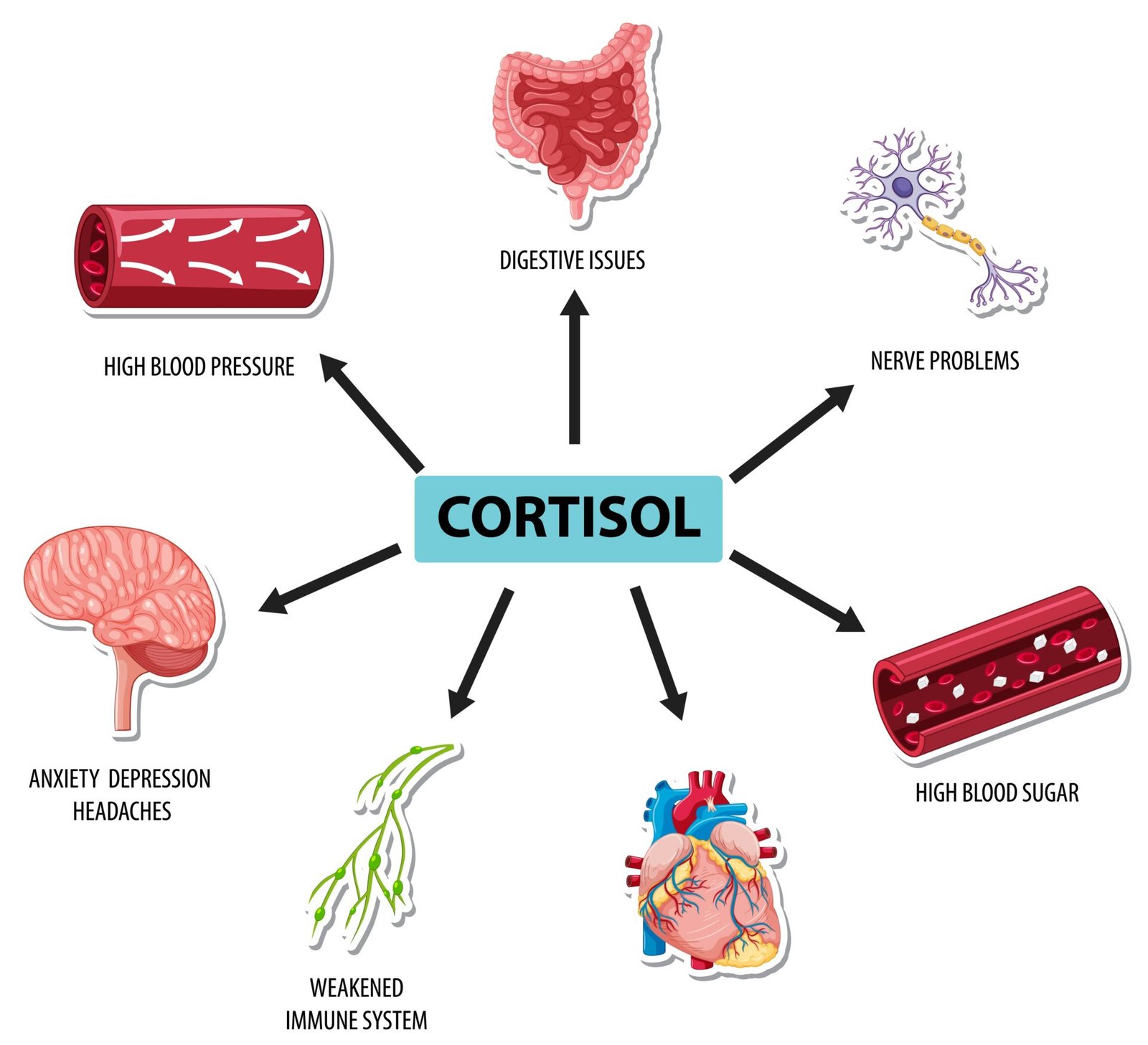
For example, testosterone and other androgens can contribute to increased facial or body hair, acne, and scalp hair thinning. Excess cortisol, particularly when caused by a medical condition such as Cushing syndrome or prolonged exposure to glucocorticoid medicines, can affect body-fat distribution, skin, muscles, blood pressure, and blood sugar.
There is also an important middle ground: the adrenal glands produce both cortisol and adrenal androgens such as DHEA-S, while the ovaries contribute to circulating testosterone.
So if you’re wondering whether your symptoms are caused by “high cortisol” or “high androgens,” symptoms alone cannot give you the answer.
Blood tests, medical history, physical examination, and sometimes additional testing are needed to understand where an androgen excess is coming from.
Why This Matters
The internet often divides hormone symptoms into neat categories:
Stress = cortisol.
Acne and facial hair = testosterone.
But your endocrine system doesn’t work in separate boxes.
The brain communicates with the adrenal glands through the hypothalamic-pituitary-adrenal (HPA) axis, while reproductive hormone production is regulated through the hypothalamic-pituitary-gonadal (HPG) axis.
These systems communicate with each other.
That means stress, sleep, metabolism, reproductive hormones, and adrenal hormones can interact without one hormone necessarily being the single cause of every symptom.
This distinction matters because an abnormal hormone result deserves an appropriate medical explanation rather than a label such as “cortisol imbalance” or “adrenal PCOS.”
The HPA Axis vs. HPG Axis: Where Are Your Hormones Coming From?
Think of your endocrine system as a network of communication.
The HPA axis: your stress-response pathway
The HPA axis connects the brain with the adrenal glands, which sit above your kidneys.
When the body needs to respond to stress, the brain signals the pituitary gland, which then signals the adrenal glands.
The adrenal glands produce cortisol, a hormone involved in:
- Blood sugar regulation
- Blood pressure
- Immune activity
- Metabolism
- The body’s response to physical stress
The adrenal glands also produce androgen precursors, including DHEA and DHEA-S.
The HPG axis: your reproductive hormone pathway
The HPG axis connects the brain and pituitary gland with the ovaries.
It helps regulate:
- Follicle development
- Ovulation
- Estrogen production
- Progesterone production
- Androgen production
The ovaries are an important source of testosterone in people with ovaries, although testosterone can also be produced through the conversion of adrenal androgens and from other tissues.
So when an androgen level is high, the question isn’t simply “Is my testosterone high?”
The next question is:
Where is the androgen excess coming from?
DHEA-S vs. Free Testosterone: The Biomarker Differentiator
Two laboratory markers often appear in discussions about androgen excess: DHEA-S and testosterone.
They tell clinicians different things.
What is DHEA-S?
DHEA-S (dehydroepiandrosterone sulfate) is an adrenal androgen precursor.
It is produced predominantly by the adrenal glands and can be converted into other androgens in the body.
A raised DHEA-S level can therefore provide evidence that the adrenal glands are contributing to androgen excess.
But there is an important distinction:
High DHEA-S does not automatically mean that psychological stress is causing the elevation.
DHEA-S can be affected by age and several medical conditions. Markedly elevated levels can require evaluation for uncommon adrenal causes.
What is free testosterone?
Testosterone is a more potent androgen.
Some testosterone circulates attached to proteins, while a smaller portion is unbound. The unbound portion is commonly referred to as free testosterone.
Higher androgen activity can contribute to:
- Coarser facial or body hair
- Acne
- Oily skin
- Scalp hair thinning
- Menstrual irregularity
When evaluating biochemical hyperandrogenism in PCOS, current international guidance recommends assessing total and free testosterone. DHEA-S and androstenedione may be considered when testosterone is not elevated, although they are less specific for PCOS.
The quality of the laboratory test matters too. Testosterone measurement can be challenging at the relatively low concentrations typically found in women, so clinicians may prefer validated, accurate laboratory methods.
What About “Adrenal PCOS”?
You may see the term “adrenal PCOS” online.
It is important to know that this isn’t a formal PCOS subtype recognised by major diagnostic guidelines.
Some people with PCOS have elevated adrenal androgens such as DHEA-S. Others have predominantly ovarian biochemical hyperandrogenism. Some have abnormalities involving both sources.
PCOS itself is a complex condition involving reproductive, metabolic, and hormonal factors.
Insulin resistance can contribute to increased ovarian androgen production in many people with PCOS, but not everyone with PCOS has the same metabolic profile.
This is why it is more accurate to describe the pattern of androgen elevation rather than dividing PCOS into “classic” and “adrenal” types.
Cortisol Face vs. Androgen-Driven Skin Changes
You’ve probably seen the phrase “cortisol face” online.
The term isn’t a medical diagnosis.
A rounded or swollen-looking face can occur for many reasons, including temporary fluid changes, normal variation, medications, and certain medical conditions.
True cortisol excess, such as Cushing syndrome, can cause a characteristic pattern of fat redistribution that may include a rounder face and increased fat around the neck and upper body. It can also cause other symptoms, such as easy bruising, muscle weakness, high blood pressure, and changes in blood sugar levels.
That is very different from ordinary day-to-day facial puffiness.
Androgen-related facial changes look different
Higher androgen activity can influence the hair follicles and sebaceous glands.
This may contribute to:
- Persistent acne
- Increased coarse facial hair
- Increased body hair
- Scalp hair thinning
The location of acne alone cannot tell you whether testosterone is elevated.
Likewise, facial swelling alone cannot tell you that cortisol is high.
Symptoms provide clues. They do not replace testing.
How Does Stress Affect Androgens?
This is where online hormone advice often becomes misleading.
Stress activates the HPA axis and changes cortisol secretion. The adrenal glands also produce DHEA-S and other adrenal hormones.
However, that does not mean that ordinary psychological stress reliably causes a large testosterone increase or that every stress-related acne flare represents an androgen spike.
The relationship between stress and reproductive hormones is complex.
Stress can affect:
- Sleep
- Appetite
- Blood sugar regulation
- Menstrual patterns
- Skin inflammation
- Perception of pain
- Overall wellbeing
These changes can make existing symptoms feel more noticeable.
In some people, adrenal androgen production may also be altered. But a symptom flare after a stressful week does not establish that testosterone or DHEA-S has increased.
There is currently not enough evidence to use a specific percentage increase in adrenal androgens as a general rule for “stress-sensitive” individuals.
Adrenal Drivers vs. Ovarian Androgen Drivers
| Feature | Adrenal contribution | Ovarian contribution |
|---|---|---|
| Important marker | DHEA-S | Total/free testosterone |
| Main source | Adrenal glands | Ovaries, with other peripheral contributions |
| Relationship to cortisol | Same gland, but different hormones | Not primarily a cortisol pathway |
| Possible symptoms | Androgen-related hair and skin changes if adrenal androgens are elevated | Acne, hirsutism, scalp hair thinning, menstrual irregularity |
| Connection with PCOS | Can occur in people with PCOS | A common contributor to biochemical hyperandrogenism in PCOS |
| Does stress prove the cause? | No | No |
| Requires medical interpretation? | Yes | Yes |
This table is a framework for understanding laboratory patterns, not a diagnostic tool.
What Tests Can Help?
If you have symptoms of androgen excess, your healthcare professional may consider tests such as:
- Total testosterone
- Free testosterone or a calculated free androgen index
- DHEA-S
- Androstenedione in selected situations
- 17-hydroxyprogesterone when congenital adrenal hyperplasia needs to be excluded in cases of congenital adrenal hyperplasia
- Thyroid testing or prolactin testing when appropriate
- Other metabolic testing, depending on your symptoms and medical history
Not everyone needs every test.
And cortisol testing is different.
A random cortisol blood test is not a general-purpose test for “stress levels.” Cortisol naturally changes throughout the day, and testing for conditions involving cortisol excess requires specific, validated testing strategies chosen according to the clinical situation.
This is one reason home “hormone panels” can be difficult to interpret without medical context.
Related HeyTimi article: The PCOS Labs Checklist: Exactly What to Request from Your Doctor
Lifestyle Considerations
Hormonal health is not improved by chasing every number on a laboratory report.
Instead of trying to “lower cortisol” or “balance testosterone” based on symptoms alone, focus on habits that support overall health.
Protect your sleep
A consistent sleep schedule supports normal circadian rhythms and can influence energy, appetite, mood, and metabolic health.
Eat regularly and adequately
There is no universal requirement for people with suspected adrenal androgen excess to follow a strict low-carbohydrate diet.
If you have PCOS or insulin resistance, your nutritional needs should be considered individually.
Avoiding extreme restriction is important, particularly when it leaves you fatigued, preoccupied with food, or unable to maintain normal daily activities.
Move in ways you can sustain
Regular physical activity supports cardiovascular and metabolic health and can also benefit sleep and mood.
It doesn’t need to be extreme to be meaningful.
Pay attention to stress without blaming yourself
Stress is a normal biological response.
The goal isn’t to eliminate every stressful feeling or become perfectly “regulated.”
Instead, notice whether periods of poor sleep, high stress, or major changes in routine consistently coincide with symptom changes.
Tracking Stress Markers and Physical Symptoms Together
This is where symptom tracking can become useful.
Rather than deciding beforehand that cortisol or testosterone is responsible, collect observations.
Try this simple sequence:
1. Record your sleep.
Note approximately how long you slept and whether your sleep felt restorative.
2. Record your stress level.
A simple 1-5 scale is enough.
3. Track physical symptoms.
Record acne, oily skin, unwanted hair growth, scalp hair changes, bloating, fatigue, or facial swelling.
4. Track your menstrual cycle.
Note your period and other significant cycle changes.
5. Look for repeated patterns.
One difficult week doesn’t establish a hormone pattern. Repeated observations over time are more useful.
6. Take meaningful patterns to your healthcare professional.
HeyTimi can help you keep these observations together rather than relying on memory.
The purpose isn’t to diagnose yourself.
It’s to turn scattered experiences into a clearer health record.
Frequently Asked Questions
Can high cortisol cause high testosterone?
Not in a simple, predictable way.
Cortisol and testosterone are connected through broader endocrine networks, but elevated cortisol does not automatically cause elevated testosterone.
If both appear abnormal, the underlying cause needs to be evaluated rather than assuming that one caused the other.
How do I know if my DHEA-S is high because of stress?
You generally cannot determine this from symptoms alone.
DHEA-S is primarily an adrenal androgen marker, but an elevated result has several possible explanations. Your age, symptoms, medications, other hormone results, and the degree of elevation all matter.
A healthcare professional can determine whether additional investigation is appropriate.
Why does stress sometimes make my acne or facial hair seem worse?
Stress can influence sleep, inflammation, skin behaviour, and other hormonal pathways.
It may also coincide with changes in menstrual cycles or daily routines.
That doesn’t prove that testosterone suddenly increased.
If symptoms are persistent, worsening, or accompanied by menstrual changes, discussing androgen testing with a healthcare professional may be appropriate.
What should I ask my doctor about?
You could ask:
- “Could my symptoms represent androgen excess?”
- “Would total and free testosterone be useful?”
- “Should DHEA-S be checked?”
- “Could another condition be causing these symptoms?”
- “Do my menstrual patterns fit PCOS?”
- “Do I need metabolic testing?”
- “Would additional endocrine testing be appropriate?”
The exact tests depend on your symptoms and medical history.
When to Speak With a Healthcare Professional
Make an appointment if you notice new or rapidly worsening:
- Facial or body hair growth
- Severe or persistent acne
- Scalp hair thinning
- Menstrual irregularity
- Voice changes
- Other noticeable changes in androgen-related features
Rapidly developing or pronounced signs of androgen excess deserve particular attention because PCOS is not the only possible explanation.
Similarly, symptoms suggesting significant cortisol excess, such as unusual, easy bruising, marked muscle weakness, persistent high blood pressure, or characteristic changes in body-fat distribution, should be discussed with a healthcare professional rather than attributed to everyday stress.
Takeaways
- Cortisol and androgens are not the same thing.
- DHEA-S is mainly an adrenal androgen precursor, while testosterone is produced by several tissues, including the ovaries.
- High DHEA-S does not automatically mean “stress hormones are high.”
- “Adrenal PCOS” is a useful internet description of a possible androgen pattern, but it is not a formal PCOS subtype.
- Acne and facial hair can reflect androgen activity, but symptoms alone cannot identify which gland is responsible.
- A rounded or puffy face is not enough to diagnose high cortisol.
- Accurate laboratory testing and clinical context matter.
- Tracking stress, sleep, menstrual patterns, and physical symptoms can help you communicate more clearly with your healthcare professional.
Your symptoms are real, but they don’t have to be solved by guessing. The goal is to understand the pattern and investigate it properly.
Reminder
Trying to understand whether your symptoms follow stress, sleep changes, your menstrual cycle, or something else?
HeyTimi gives you one place to record daily stress, sleep, energy, cycle changes, acne, hair changes, and other symptoms. HeyTimi supports education, self-tracking, and lifestyle organization. HeyTimi does not diagnose, treat, or cure disease, nor does it measure hormone levels. Over time, these observational records can help you identify patterns to support more productive conversations with your doctor.
Medical Disclaimer
The information in this article is for educational purposes only and is not a substitute for professional medical advice, diagnosis, or treatment. Always consult your endocrinologist, gynaecologist, or qualified healthcare professional regarding hormonal testing or treatment.
Verified References
- The Endocrine Society. Androgen Therapy in Women: A Reappraisal: An Endocrine Society Clinical Practice Guideline. The Journal of Clinical Endocrinology & Metabolism.
- Teede HJ, et al. Recommendations from the 2023 International Evidence-based Guideline for the Assessment and Management of Polycystic Ovary Syndrome. The international guideline recommends total and free testosterone as the primary biochemical measures of hyperandrogenism and notes that DHEA-S has lower specificity for PCOS.
- Rosenfield RL. The Search for the Causes of Common Hyperandrogenism, 1965 to Circa 2015. Endocrine Reviews. 2024.
- Rosenfield RL. Normal and Premature Adrenarche. Endocrine Reviews. 2021.
- Tosi F, et al. 11-Oxygenated Metabolites of Testosterone in PCOS. The Journal of Clinical Endocrinology & Metabolism. 2022.