Build a Balanced Plate, Not a Perfect One
Eating well with PCOS or PMOS does not mean cutting out carbohydrates, counting every calorie or following a strict meal plan.
A useful starting point is to build meals around three things:
- Half your plate: Non-starchy vegetables.
- A palm-sized portion: Protein.
- A fist-sized portion: A carbohydrate source, preferably one rich in fibre or less refined.
This is a visual guide, not a strict rule. Your appetite, activity, health needs and portion requirements may mean you need more or less food.
The 2023 international PCOS guideline recommends sustainable, balanced eating that fits individual needs. It does not identify one diet or meal formula as best for everyone with PCOS.
Why This Combination Can Help
1. Vegetables provide fibre
Vegetables such as spinach, broccoli, cabbage and carrots provide fibre and other nutrients. Fibre can support digestion and help slow the absorption of carbohydrates when eaten as part of a meal.
2. Protein supports fullness
Fish, eggs, chicken, tofu and beans provide protein. Including protein in meals helps support muscle maintenance and can make meals more satisfying.
3. Choose carbohydrates for quality, not fear
Carbohydrates are an important source of energy. Instead of removing them, consider options such as beans, lentils, oats, sweet potatoes, whole grains and less refined staples.
A 2025 systematic review of dietary studies in PCOS found that higher-fibre and lower-glycaemic-index diets were associated with improvements in some metabolic measures, including fasting glucose and insulin resistance. The findings are encouraging, but they do not mean every person with PCOS needs the same carbohydrate intake.
4. Include some healthy fat
Avocado, nuts, seeds and olive oil can add flavour and help make a meal satisfying. You do not need to avoid fat to build a balanced plate.
Three Practical PCOS-Friendly Plates
Plate 1: Fish, Vegetables and Sweet Potato
- Vegetables: Steamed broccoli, spinach and bell peppers.
- Protein: Grilled fish such as mackerel or salmon.
- Carbohydrate: A serving of boiled or roasted sweet potato.
- Optional addition: A little avocado.
Plate 2: Beans and Chicken Bowl
- Vegetables: Cabbage, cucumber, tomatoes and leafy greens.
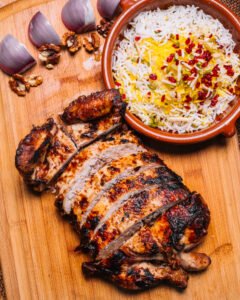
- Protein: Grilled or roasted chicken.
- Carbohydrate: A serving of brown rice or another whole grain.
You can also use beans or chickpeas as part of the meal. Remember that beans provide both carbohydrates and protein, so they contribute to more than one part of the plate.
Plate 3: Eggs, Vegetables and Plantain
- Vegetables: Sautéed spinach, tomatoes, mushrooms and onions.
- Protein: Eggs or tofu.
- Carbohydrate: A serving of boiled or roasted plantain.
You do not have to give up familiar foods to eat in a balanced way. Preparation, portions and what you eat alongside a food can all matter.
A Small Experiment: Change the Order of Your Bites
If it feels comfortable, try eating some of your vegetables and protein before moving on to the carbohydrate portion of your meal.
Small studies suggest that this order can reduce the immediate rise in blood glucose after eating. However, the evidence is still developing, and it has not been established as a PCOS-specific treatment. It is an optional experiment, not a rule you must follow.
Your HeyTimi Action
At your next meal, pay attention to how you put your plate together. You can use HeyTimi’s meal logs to record what you ate and your daily check-ins to reflect on your energy, cravings and mood.
Over time, these notes can help you notice your own experiences without judging individual meals as good or bad.
Medical Disclaimer
This lesson is for education only and is not medical advice. Food needs differ from person to person. If you have diabetes, take medication that affects blood glucose, are pregnant or have specific dietary needs, ask a qualified healthcare professional or registered dietitian for advice tailored to you.
Sources
- Zhang L, et al. (2025). Optimizing carbohydrate quality: a path to better health for women with PCOS. Frontiers in Nutrition.
- Teede HJ, et al. (2023). Recommendations from the 2023 International Evidence-based Guideline for the Assessment and Management of Polycystic Ovary Syndrome. Human Reproduction.
- Effect of eating vegetables before carbohydrates on glucose, insulin and glycemic control (2026). Systematic review and meta-analysis of randomised trials.